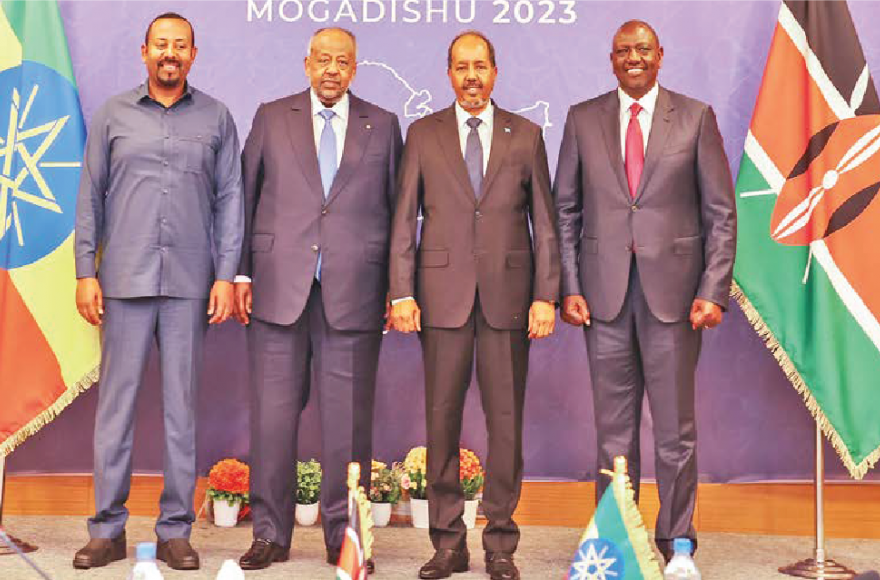
E ast African countries have been facing many challenges in the diplomatic relations between them in recent years, and now it seems that the situation may worsen even though there are efforts by the leaders in the region to normalize the situation. In this article, 5 Magazine will look into those events starting with the latest diplomatic tension between the Federal Government of Somalia and Ethiopia after Addis Ababa signed a port deal with the breakaway region of Somaliland.
Somalia and Ethiopia
On Monday 1st of January 2024, the breakaway region of Somaliland signed a pact with Ethiopia, allowing the landlocked nation to “secure access to the sea and seaport” along the breakaway nation. “The memorandum of understanding (MoU) was signed between Prime Minister Abiy Ahmed and Somaliland’s President Muse Bihi Abdi, who has been on a state visit to Ethiopia since Sunday,” The Addis Standard reported.
“The MoU will enable Ethiopia to secure access to the Sea and diversify its access to seaports,” the pact, signed at Addis Ababa, reads in part. According to the official readout, the MoU will “pave the way to realize the aspiration of Ethiopia to secure access to the sea and diversify its access to seaports.” Redwan Hussien, National Security Advisor to Prime Minister Abiy Ahmed, said the MoU will also “pave the way for accessing a leased military base on Red Sea.” Somaliland seceded from Somalia more than 30 years ago, but is not recognized internationally. It said that Ethiopia agreed to recognize its independence at some point in the future in exchange for military access to the coast. Somalia, however, has reacted angrily to the “MoU” as it sees Somaliland as part of its territory. The Federal Government has described the agreement as an act of “aggression”. The government said the agreement was “null and void” and a violation of its sovereignty. In a statement it added that it “considers this action as an aggression and… is an impediment to the good neighborliness, peace and stability of the region which [is] already struggling with many challenges”. Somalia further reacted strongly and protested by recalling its ambassador to Ethiopia for “consultations,” even as it maintained that the deal signed in Addis Ababa between Ethiopia and Somaliland state is null and void.
Not an inch Slogan
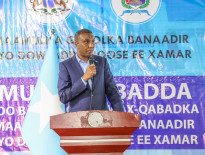
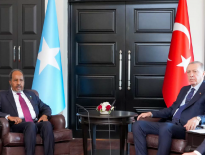
Not an inch of Somali territory will be ceded to foreigners, President Hassan Sheikh Mohamud has said urging Ethiopia to forget about the deal it entered into with the break-away region of Somaliland. While addressing a joint session of the Federal Parliament hours after the deal, President Mohamud spoke widely about the MoU noting that it violated domestic and international law and that the Federal Government will explore all appropriate avenues to defend its territorial integrity. The President directed his remarks to Ethiopian Prime Minister Abiy Ahmed in more than one instance, reminding him that ‘Ethiopian aggression is not new in our history,’ but this time around it will not go unchallenged. He unequivocally remarked, “No one can take an inch of Somalia.” “Somalia belongs to Somalis. We have always defended our territorial integrity and sovereignty, and we will assert our exclusive rights in accordance with international laws. We will protect every inch of our sacred land and not tolerate attempts to relinquish any part of it,” the President said
Kenya and its neighbors
Kenya’s relations with its neighbors have come under sharp scrutiny, following successive diplomatic rows that have put a stake delicate business and political ties. Although reversed after 24 hours but on Monday 15th of January, Tanzania banned Kenya Airways’ passenger flights to Dares-Salam, to become the latest addition to a growing list of standoffs that have exposed simmering diplomatic tensions with its neighbors. The tiff with Tanzania came just days after Uganda sued Nairobi at the East African Court of Justice for the right to import petroleum through Kenya. Sudan and Democratic republic of Congo have recalled their ambassadors to Nairobi. Even though the row over Kenya Airways (KQ) flights to Tanzania was resolved within days, the ban painted Kenya in a poor diplomatic light and appeared to have given Dodoma a higher moral ground. A week before this event, President Yoweri Museveni of Uganda took Kenya to the East African Court of Justice after Nairobi denied Kampala’s governmentowned oil marketer a license to operate locally, and handle fuel imports through the port of Mombasa. President Museveni accused Kenyan middlemen of being behind high fuel pump prices in Kampala even as prices fall globally. Since President Ruto assumed office in August 2022, he has made trips to all members of the EAC including the DRC, Tanzania, Uganda, Rwanda, Burundi, South Sudan and Ethiopia, in an apparent effort to cement friendship. But the trips seem to have failed to bear much fruits given the current tiffs with its neighbors. Instead, the government’s decisions on trade and politics seem to have rubbed its neighbors the wrong way.
On the other hand, Sudan’s government has repeatedly accused President Ruto of having business ties with the paramilitary Rapid Support Forces during his tenure as the Deputy President under President Uhuru Kenyatta’s Jubille government. Dr. William Ruto has denied all the allegations made against him. January 4th, Sudan recalled its ambassador to Kenya in a protest against the official reception for Mohamed Hamdan Dagalo, the commander of the paramilitary Rapid Support Forces (RSF). On December 16th 2023, DRC also recalled its ambassadors to Kenya over the M23 rebels’ activities in Kenyan soil, which it deemed contrary to the spirit of the East African Community. President Felix Tshisekedi protested the decision by Kenya to allow the M23 rebels to launch a movement in Nairobi.
DRC and Rwanda
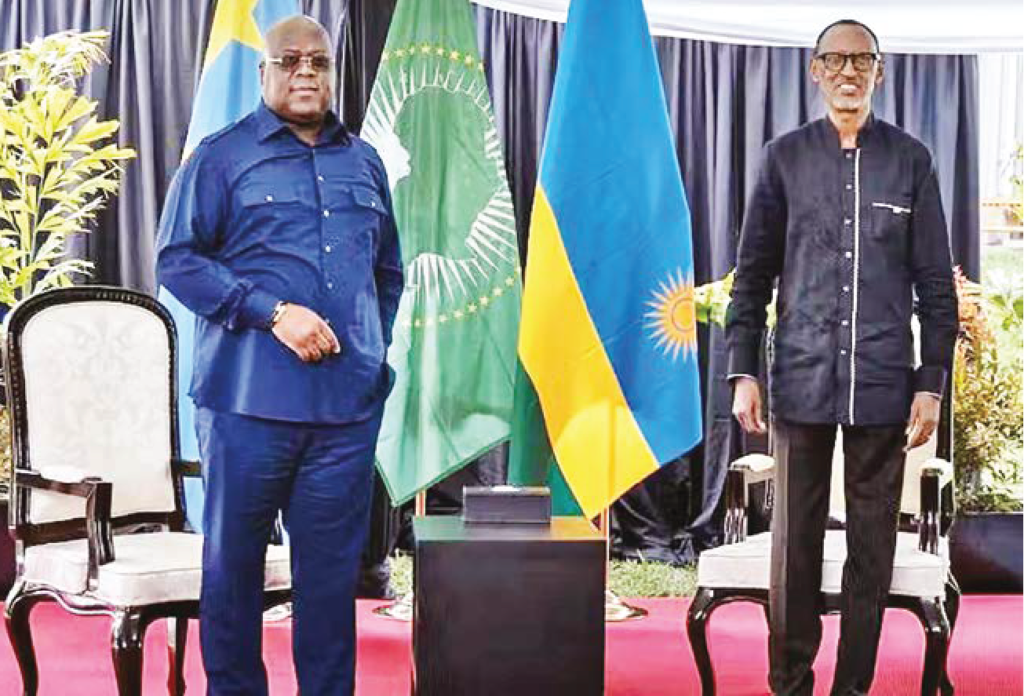
There are diplomatic tiffs between Kigali and Kinshasa that date back to the mid of 2022 over allegations of official support for rebel groups in eastern Democratic Republic of Congo. From that time, tension has continued to rise in the Great Lakes, after DRC accused Rwanda of supporting the M23, a Congolese Tutsi grouping who recently relaunched attacks against government forces, FARDC. Rwanda, on its part, accused the Congolese army of supporting remnants of the 1994 genocidaire army, Democratic Forces for the Liberation of Rwanda (FDLR), responsible for the Genocide Against the Tutsi. These two neighboring countries have been in conflict diplomatically with each other for decades, with concerns being expressed every time that it could lead to an escalation that could undermine stability across the Great Lakes region and East Africa.
Finally, there are some other conflicts in the region that have occurred in the past and historical ones that are always feared to gain back momentum, such as Ethiopia and Eretria, and those that can be created by the current situation, such as Sudan, which is concerned about the reception that the commander of the paramilitary Rapid Support Forces (RSF), Mohamed Hamdan Dagalo, received weeks ago in many countries in the region such as Uganda, Ethiopia, Kenya and Djibouti.
Hey, like this? Why not share it with a buddy?
« President Deni pledges unity and cohesion after securing re-electionBuruuj: Modernizing Somalia’s Infrastructure »
Related Posts